
The financial world is evolving fast, and tokenized treasury bonds yield has become a central topic for modern investors. Moreover, blockchain technology now allows institutions to digitize traditional government debt efficiently. Consequently, investors can access stable yields once reserved for large financial players. This shift creates a significant opportunity for retail and institutional participants alike.
What Are Tokenized Treasury Bonds?
Tokenized treasury bonds are digital representations of government debt recorded on a blockchain. Therefore, each token corresponds to a specific face value of a traditional bond. Furthermore, smart contracts automate interest payments and maturity settlements automatically. Additionally, these tokens trade on decentralized platforms, making them accessible around the clock.
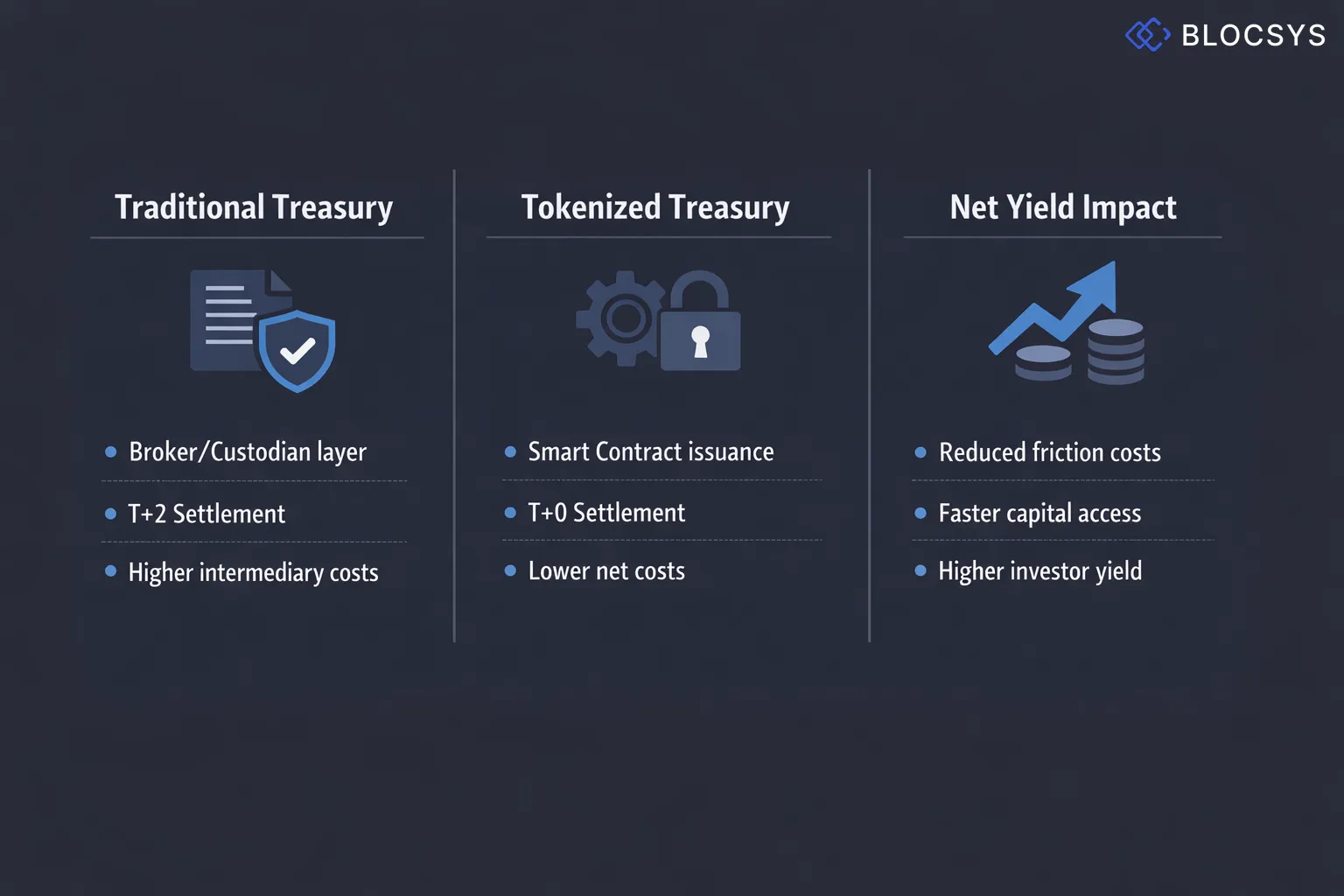
Traditional treasury bonds require investors to work through brokers and financial institutions. However, tokenization removes many costly intermediaries from the process. As a result, investors enjoy lower transaction costs and significantly faster settlement times. This innovation fundamentally changes how government debt operates in modern financial markets.
How Tokenization Works
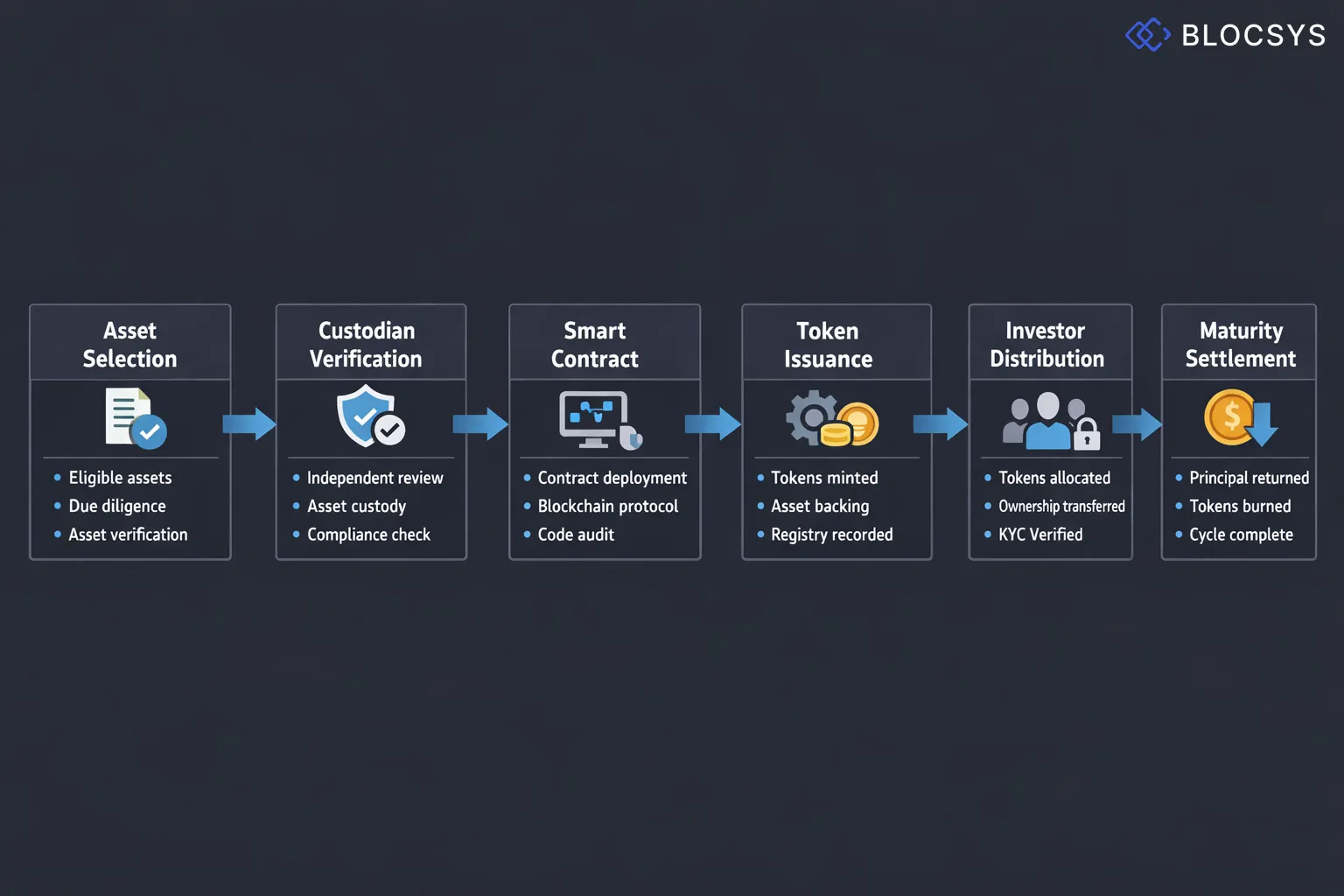
The tokenization process involves several clearly defined steps. First, a financial institution selects eligible treasury bonds for digitization. Next, an independent custodian holds the underlying assets securely on behalf of investors. Moreover, a technology provider then deploys smart contracts on a suitable blockchain network. Finally, digital tokens are distributed to investors through a regulated, compliant platform.
Smart contracts enforce all bond terms automatically and transparently. Therefore, coupon payments flow directly to token holders on the scheduled payment date. Additionally, every transaction records on an immutable ledger, which substantially boosts investor confidence. Learn more from BlackRock’s tokenization resources.
Tokenized Treasury Bonds Yield: How It Works
The tokenized treasury bonds yield closely mirrors that of the underlying government securities. However, platform fees and prevailing liquidity conditions influence the net return investors ultimately receive. Furthermore, yield structures vary depending on the token issuer and bond maturity. Therefore, investors should compare multiple platforms carefully before committing their capital.
Currently, short-term U.S. Treasury tokenized products yield approximately 4–5%, reflecting prevailing market interest rates. Moreover, some platforms pass the full yield directly to investors with minimal deductions. Consequently, these products compete effectively with money market funds and high-yield savings accounts. This positioning makes tokenized treasuries a compelling choice in a higher-rate environment.
Comparing Yields to Traditional Bonds
Traditional treasury bonds and their tokenized counterparts share similar base yields. However, tokenized versions deliver additional advantages in accessibility and near-instant settlement speed. Furthermore, fractional ownership enables investors to build exposure with much smaller capital amounts. Additionally, secondary market liquidity on blockchain platforms often surpasses that found in traditional OTC bond markets.
Some platforms also enhance yield through liquidity provision or staking strategies. Therefore, sophisticated investors may earn above-market returns compared to holding standard treasuries directly. Nevertheless, these strategies carry meaningfully higher risk. Always review platform documentation thoroughly before participating. Refer to the SEC’s guidance on tokenized securities for essential regulatory context.
Key Benefits of Tokenized Treasury Bonds
Tokenized treasury bonds offer several compelling advantages over traditional fixed-income products. Additionally, these benefits attract a broad range of investors seeking stable, government-backed returns combined with modern technological accessibility.
- Fractional ownership: Investors can purchase small portions of bonds, significantly lowering the entry barrier.
- 24/7 trading: Blockchain platforms enable round-the-clock transactions, unlike traditional bond markets.
- Faster settlement: Transactions settle in near real-time, substantially reducing counterparty risk.
- Full transparency: All transactions record on an immutable ledger, boosting long-term investor confidence.
Moreover, tokenized bonds strongly appeal to global investors. Therefore, someone in Asia or Europe can access U.S. Treasury yields without navigating complex foreign brokerage requirements. Consequently, this democratizes access to one of the world’s safest asset classes.
Accessibility and Liquidity
Liquidity remains a critical factor for any fixed-income investment strategy. However, tokenized treasury bonds often provide superior liquidity compared to traditional OTC bond markets. Furthermore, automated market makers enable continuous, frictionless trading throughout the day. Additionally, some issuers guarantee redemption at par value, further strengthening the overall liquidity profile. Explore our guide on blockchain-based fixed income investing for a deeper analysis.
Key Risks to Consider Before Investing
Despite their clear advantages, tokenized treasury bonds carry unique risks investors must fully understand. Therefore, thorough due diligence is essential before purchasing these instruments. Furthermore, regulatory uncertainty remains a major concern across multiple global jurisdictions.
Smart contract vulnerabilities present a genuine technical risk. Consequently, a coding flaw or security breach could result in significant fund losses. Moreover, platform insolvency or custodian failure could directly impact token holders’ assets. Additionally, liquidity can decline rapidly during periods of market stress. Therefore, diversification remains essential even within this innovative asset class. Check our overview of digital asset regulation trends for the latest updates.
The Future of Government Bond Investing
Tokenized treasury bonds represent the next major evolution in fixed-income investing globally. Moreover, major institutions including BlackRock, Franklin Templeton, and Fidelity are already active participants in this space. Consequently, market adoption will likely accelerate significantly as regulatory frameworks mature and standardize. Furthermore, central banks worldwide are actively exploring direct issuance of tokenized government debt instruments.
Investors who deeply understand tokenized treasury bonds yield dynamics today will gain a meaningful competitive advantage. Therefore, now is an ideal time to explore this rapidly emerging asset class. Additionally, staying consistently informed about platform developments and regulatory changes will help maximize long-term returns. The convergence of traditional finance and blockchain technology is not a distant future — it is actively happening right now.
