Real World Asset Tokenization Investment: Your Complete 2026 Guide
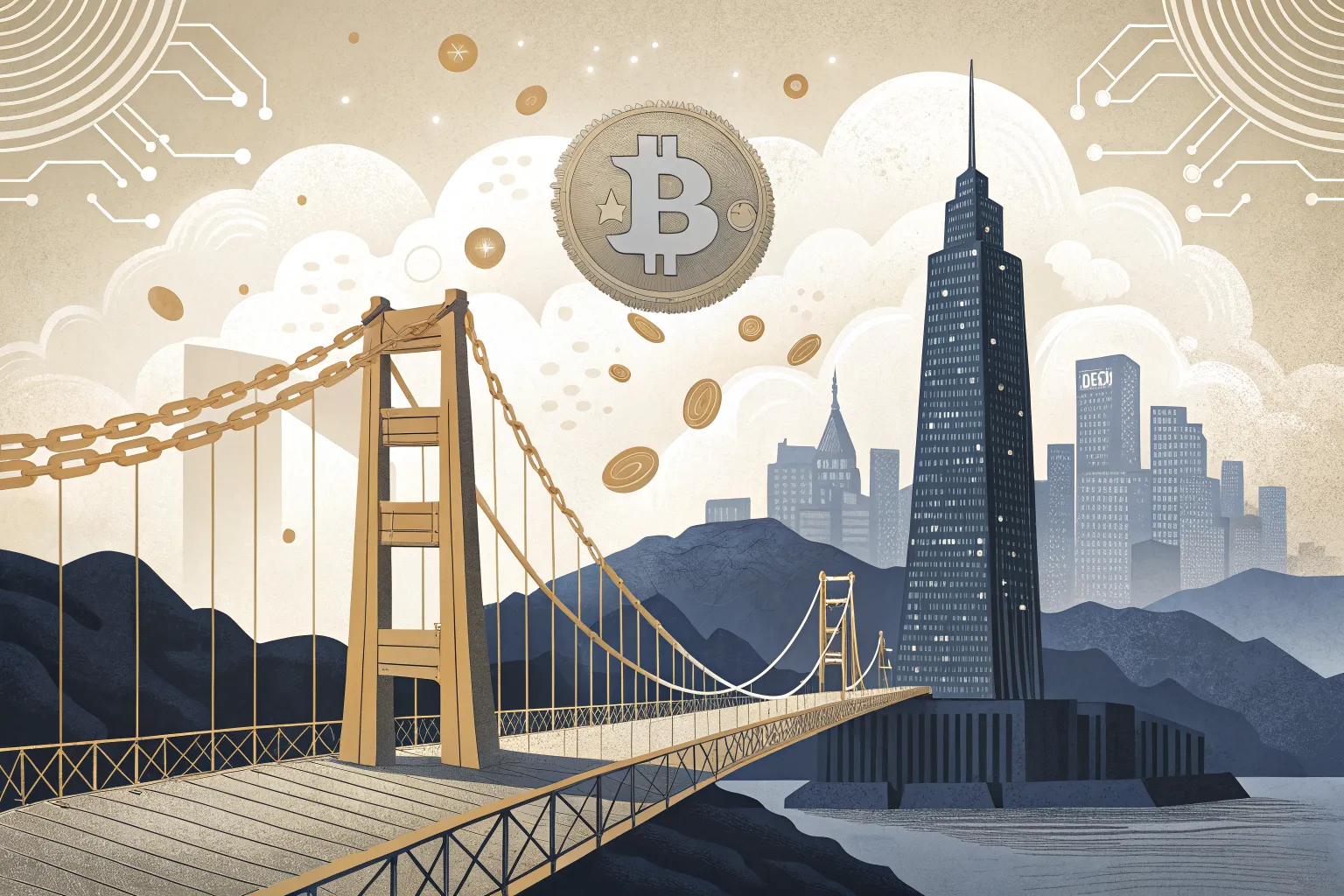
Real world asset tokenization investment is reshaping how capital works, how markets operate, and who gets access to serious wealth-building opportunities. Traditionally, high-value assets — commercial real estate, private equity, infrastructure bonds, fine art — stayed locked behind institutional gatekeepers and minimum investment thresholds that excluded most people. Today, blockchain technology is changing that. By converting physical and financial assets into digital tokens on a distributed ledger, tokenization lets you own a fractional share of a $50 million office building just as easily as buying a stock. This guide walks you through exactly how this works, why it’s accelerating, what the real risks are, and how you can position yourself intelligently — whether you’re an investor or a builder.
What Is Real World Asset Tokenization Investment?
At its core, real world asset tokenization investment means converting the legal ownership rights of a physical or financial asset into digital tokens recorded on a blockchain. Each token represents a proportional claim — whether that’s equity, revenue share, or debt — in the underlying asset. Furthermore, those tokens are tradeable, programmable, and composable within DeFi protocols.
Think about it this way: you don’t need to buy an entire apartment building. Instead, you can buy 500 tokens representing 0.5% of the building’s value. Moreover, the blockchain makes your ownership transparent, immutable, and transferable without expensive intermediaries processing each step.
This isn’t speculative theory anymore. Major financial institutions — from JPMorgan to BlackRock — have already tokenized billions in assets. Consequently, the market is maturing fast, and early movers are building real positions before institutional capital fully floods in.
If you want to understand how a proper Asset Tokenization Platform structures these mechanics, exploring the infrastructure layer is a smart starting point for any serious investor or founder.
Why Real World Asset Tokenization Investment Is Growing Fast
Three forces are driving explosive growth here: liquidity demand, cost pressure, and regulatory maturation. Each one reinforces the others.
Illiquid assets represent roughly $300 trillion globally. However, most of that value sits untouched because buyers and sellers can’t find each other efficiently. Tokenization creates secondary markets that didn’t previously exist — so you can sell your position in a tokenized fund without waiting seven years for an exit window.
Additionally, blockchain-based settlement cuts out layers of intermediary cost. Traditional securities settlement takes two days and involves custodians, clearinghouses, and transfer agents. Tokenized assets can settle in minutes, directly on-chain. Therefore, cost savings flow back to investors through better yields.
Regulatory clarity is arriving. The EU’s MiCA regulation, the UAE’s VARA framework, and Singapore’s MAS guidelines are all creating defined rules for tokenized securities. This clarity is encouraging institutional capital to move in at scale — and that institutional wave will lift the entire sector.
Speed is the real differentiator. Real world asset tokenization investment compresses timelines that once took months into processes that take days.
The Mechanics Behind Tokenized Asset Investment
Smart Contracts and Token Standards
Smart contracts are the engine of tokenized investing. They automate compliance rules, dividend distributions, and ownership transfers without human intervention. Furthermore, they’re self-executing — once conditions are coded in, they run exactly as programmed, every time, without delay or discretion.
Token standards matter significantly here. ERC-20 handles fungible tokens well, but asset tokenization often needs ERC-1400 or ERC-3643, which embed compliance logic directly into the token itself. These standards let you enforce transfer restrictions, investor whitelisting, and regulatory hold periods automatically.
Programmability is the underrated advantage. Your token can automatically distribute rental income monthly, enforce lockup periods, or restrict transfers to verified investors only — without a fund administrator running the process. That’s a structural efficiency gain that compounds over time.
Teams building these systems often need to hire real world asset tokenization developers who understand both DeFi primitives and compliance architecture. That dual expertise is rare but non-negotiable for serious projects.
Custody, Legal Frameworks, and Compliance
Here’s where many projects stumble. The blockchain token is only half the picture.
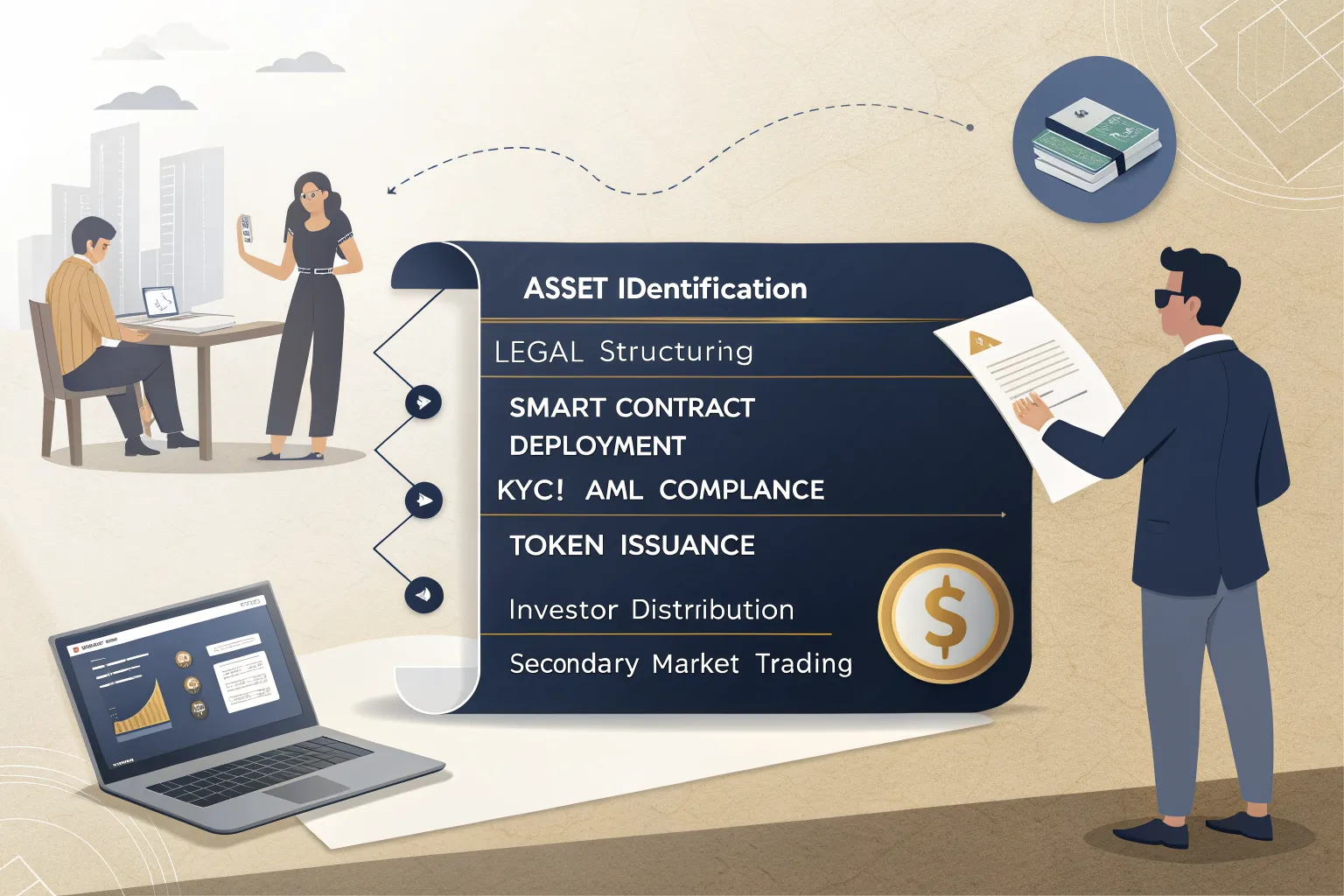
The legal wrapper — the SPV, trust deed, or LLC operating agreement — is what actually gives your token enforceability in court. Without that structure, you have a sophisticated database entry, not a property right. Moreover, the relationship between the on-chain token and the off-chain legal entity must be crystal clear and auditable.
Custody is equally critical. Your digital tokens need qualified custodians who can hold private keys securely and satisfy institutional requirements. KYC and AML checks must happen at the onboarding stage, so every token holder is verified before receiving their allocation.
“The most dangerous assumption in tokenized asset projects isn’t a code vulnerability — it’s believing that minting a token automatically creates a legal property right. Without a properly structured legal wrapper binding the token to an enforceable ownership claim, you’ve built an elegant database. Investors deserve to understand that distinction before they commit capital.” — Senior Blockchain Legal Counsel, financial infrastructure advisory
Types of Assets Suited for Real World Asset Tokenization Investment
Not every asset tokenizes equally well. The strongest candidates share key traits: high value, limited liquidity, and clear cash flows or appreciating value over time.
Real Estate is the most mature category. Commercial properties, residential portfolios, and REIT-style structures are being tokenized actively. You get fractional ownership, yield distributions, and improved secondary market liquidity — all in a single product.
Private Credit and Debt is growing rapidly. Tokenized treasury bills, corporate bonds, and private lending pools let you access fixed-income returns that once required $1 million minimums. Additionally, on-chain transparency means you can verify the underlying collateral in real time, not quarterly.
Commodities — gold, oil, agricultural products — benefit enormously from tokenization. Instead of dealing with ETF wrappers and counterparty exposure, you hold tokens backed by physically allocated assets in verified vaults.
Carbon Credits represent one of the most exciting emerging categories. The Carbon Tokenization Platform Development use case shows how environmental assets are entering the tokenized investment space with real institutional demand behind them.
Infrastructure and Private Equity — airports, toll roads, data centers — are moving on-chain as institutional players seek programmable ownership structures for complex, long-duration assets.
Key Benefits of Real World Asset Tokenization Investment
Liquidity and Fractional Ownership
Liquidity is the headline benefit. Previously, you’d invest in a private real estate fund and wait seven to ten years for an exit event. Tokenization creates secondary markets where you can sell your position to another verified investor in minutes. Therefore, your capital isn’t trapped for years in illiquid structures.
Fractional ownership democratizes access in a concrete way. You don’t need $500,000 to invest in a commercial asset. Token minimums as low as $100 are now possible, which lets retail investors build diversified portfolios across asset classes that were once exclusively institutional territory.
The Decentralized Traded Funds (DTF) Platform — AI-Powered On-Chain Asset Management model shows how automated, on-chain fund management is becoming a genuine alternative to traditional structures — with better transparency and lower management overhead.
Transparency and Security
Every transaction is recorded on an immutable ledger. You can verify ownership history, audit cash flow distributions, and check collateral positions without relying on a fund manager’s quarterly report. That’s a fundamental shift in how trust works.
Smart contract automation removes human discretion from distribution calculations. Consequently, you receive your proportional yield automatically, on schedule, without administrative delay or potential error.
Security is multi-layered in well-built systems. Blockchain records can’t be altered retroactively, and projects using Tamper-Proof Document Verification Built on Blockchain anchor legal documents on-chain — so you always have cryptographic proof of your ownership rights alongside the token itself.
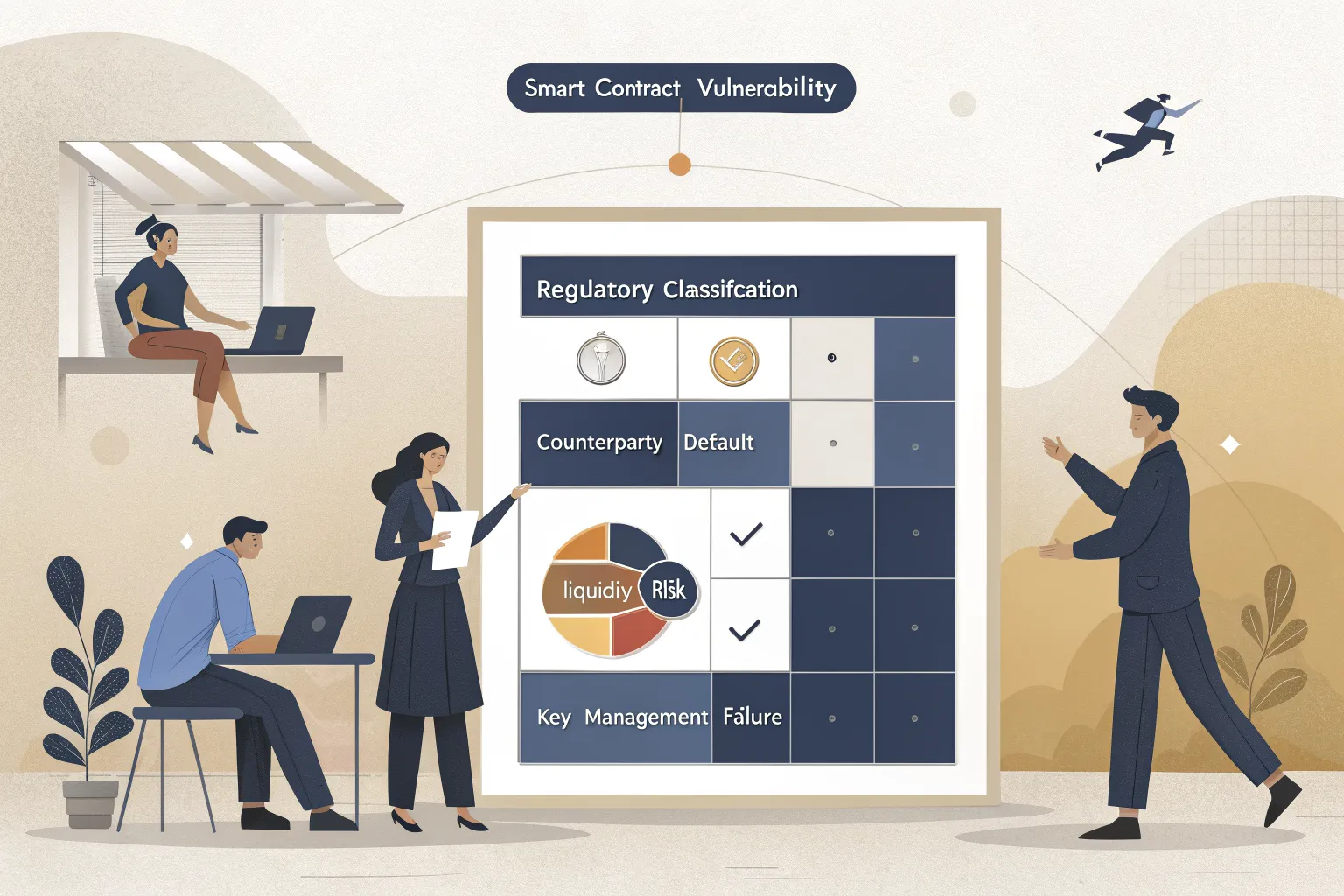
Risks and Challenges in Real World Asset Tokenization Investing
Real talk: tokenization doesn’t eliminate risk. It transforms some risks and introduces new ones. You need to understand both clearly before committing capital.
Regulatory Uncertainty
Regulation remains fragmented globally. What’s compliant in Singapore may be restricted in the US. Moreover, rules are still evolving, so a structure that’s fully compliant today may need restructuring when new guidance arrives next year.
Securities classification is the biggest landmine. If regulators classify your token as an unregistered security, the project faces enforcement action and potentially frozen investor funds. Therefore, always confirm that any platform you use operates under a clear, documented regulatory framework in your jurisdiction before deploying capital.
Don’t skip this step. Regulatory risk is the one that can take your entire investment to zero overnight.
Technical and Counterparty Risks
Smart contract bugs are real, even in audited code. A single exploit can drain a liquidity pool or permanently lock investor funds. Consequently, always check whether a platform has undergone multiple independent security audits from reputable firms — not just one internal review.
Counterparty risk doesn’t disappear because something is on-chain. You still rely on the off-chain entity to maintain the underlying asset, pay insurance, and honor legal obligations. If the SPV managing a tokenized building defaults, your recovery depends entirely on the quality of the legal enforcement mechanism — not the blockchain.
Key management is another risk vector. Losing access to your wallet means losing your tokens permanently in most cases. Use hardware wallets and multi-signature setups for any significant position.
“The on-chain layer is the easy part to audit — the code is public and deterministic. It’s the off-chain obligations that carry the hidden risk: property management quality, loan servicing discipline, legal enforcement jurisdiction. Most retail investors price tokenized assets as if the blockchain eliminates these risks. It doesn’t. It just makes the token layer transparent.” — DeFi Protocol Architect, institutional asset tokenization advisory
How to Start Your Real World Asset Tokenization Investment Journey
Starting your real world asset tokenization investment journey doesn’t require being a blockchain expert. However, it does require methodical due diligence before you deploy capital anywhere.
Choose your asset class first. Start with what you already understand. If you’ve invested in real estate before, tokenized real estate is a logical entry point. Similarly, if you understand fixed income, tokenized treasury bills or private credit pools are familiar terrain.
Vet the platform carefully. Look for platforms that clearly disclose their legal structure, custody arrangements, and regulatory registration. Furthermore, check for third-party smart contract audits and transparent financial reporting on the underlying assets. No audit, no allocation.
Understand the token economics completely. Know whether you’re receiving equity, debt, or revenue share. Understand how distributions are calculated, when they’re paid, and what happens to your tokens if the underlying asset is sold or the platform winds down.
Start small and observe. Allocate a test position first, watch how distributions work, and build confidence before scaling exposure. Real world asset tokenization investment rewards patience and systematic learning over impulsive bets.
If you’re building rather than just investing, understanding what a full Real World Asset Tokenization project involves from the development side makes you a sharper investor — you’ll recognize quality architecture when you see it.
Building the Infrastructure for Tokenized Investment
For founders and builders entering this market, the infrastructure layer is where real value compounds. You’re not just building a trading platform — you’re constructing compliant ownership rails for trillion-dollar asset classes.
Team composition matters enormously here. You need blockchain engineers who understand DeFi primitives, legal counsel who can structure SPVs and offering documents, and compliance specialists who can navigate multi-jurisdictional securities law. That combination is rare to hire from scratch.
Many successful projects use Dedicated Blockchain Engineering Teams rather than assembling individual hires. Cohesive teams with prior tokenization experience ship faster and avoid costly architectural mistakes that slow projects down for months.
DAML (Digital Asset Modeling Language) is gaining traction for modeling complex financial contracts that need to work across multiple parties and jurisdictions. If your project involves institutional-grade financial instruments, you might want to hire DAML developers who can model asset contracts with full auditability and counterparty clarity.
AI is entering this space meaningfully. AI Agent Skills for On-Chain Operations are enabling automated portfolio rebalancing, compliance monitoring, and yield optimization — all running autonomously on-chain. Platforms that build this capability early will have a durable structural advantage over those that add it later.
The Future of Real World Asset Tokenization Investment
The future of real world asset tokenization investment is institutional, interoperable, and deeply woven into DeFi infrastructure. We’re moving from pilot programs to mainstream adoption — and the trajectory is steep.
Cross-chain interoperability will unlock massive liquidity pools. Currently, tokenized assets on Ethereum can’t directly interact with assets on Avalanche or Polkadot. However, cross-chain messaging protocols are actively solving that, and once they mature, you’ll see unified liquidity markets spanning all major chains — dramatically increasing the addressable market for every tokenized asset.
Institutional adoption is accelerating beyond pilot status. BlackRock’s BUIDL fund tokenized over $500 million in treasury assets within its first months of operation. Furthermore, central banks globally are exploring tokenized bond issuance as a way to modernize sovereign debt settlement. That’s not a fringe experiment — that’s the financial system upgrading its rails.
AI integration will make real world asset tokenization investment more intelligent and accessible simultaneously. Automated due diligence, AI-driven risk scoring, and on-chain portfolio management are converging into platforms that manage complex multi-asset positions with minimal human oversight — lowering barriers further while improving risk management.
If you’re building in this space right now, the Founder Checklist 2026: Blockchain Startup Guide provides a useful framework for navigating the current landscape without missing critical steps.
Fractional ownership of global assets will become as routine as owning stocks. Moreover, the programmability of tokenized assets will enable financial products that don’t exist yet — dynamic yield instruments, self-executing insurance contracts, and cross-border ownership structures that bypass traditional settlement friction entirely.
Frequently Asked Questions
Here are direct answers to the questions we hear most often about real world asset tokenization investment.
What is the minimum investment for tokenized assets?
Minimums vary by platform and asset class, but many tokenized real estate and debt products accept investments starting between $100 and $1,000. That’s dramatically lower than traditional private markets, which often require $250,000 or more as a minimum commitment.
Some tokenized treasury products go even lower. However, always check the specific platform’s terms — some institutional-grade offerings still require accredited investor status and carry higher minimums regardless of the fractional token structure.
Is real world asset tokenization investment legally regulated?
Yes, in most serious jurisdictions. The EU’s MiCA framework, Singapore’s MAS guidelines, and the UAE’s VARA regime all cover tokenized securities with increasing specificity. The US treats most tokenized assets as securities, requiring either registration or exemptions under Reg D or Reg S.
Regulatory compliance isn’t optional — it’s the foundation that protects your investment. Always verify that your chosen platform holds relevant licenses in your jurisdiction and has legal opinions supporting their token classification before committing capital.
How do I receive returns from tokenized assets?
Smart contracts distribute returns automatically to token holders based on their proportional share. For a tokenized rental property, monthly rental income is collected on-chain, operating costs are deducted according to preset rules, and the net yield flows directly to your wallet address without manual processing.
Distribution frequency depends on the specific asset. Real estate typically distributes monthly or quarterly. Fixed-income tokenized products often match traditional coupon schedules — monthly, quarterly, or semi-annual — depending on how the underlying instrument is structured.
What happens to my tokens if the platform shuts down?
This is one of the most important due diligence questions you should ask any platform before investing. Your tokens’ value depends on the legal structure behind them — typically an SPV or trust holding the underlying asset on behalf of token holders, independent of the platform operator.
Well-structured projects include backup administrator rights and clearly documented wind-down procedures in their legal terms. Always read those provisions specifically — a platform that can’t explain its wind-down process clearly is a platform you shouldn’t trust with meaningful capital.
Can tokenized assets be used as DeFi collateral?
Increasingly, yes. Several DeFi protocols now accept tokenized treasury bills and real estate tokens as collateral for loans. This composability is one of the most powerful aspects of real world asset tokenization investment — your otherwise illiquid holdings can generate liquidity without selling your position.
However, collateral eligibility depends on specific protocol support for specific token standards. Furthermore, collateral ratios tend to be conservative compared to crypto-native assets — typically 50–70% LTV — reflecting the lower price volatility and slower liquidation process for real-world underlying assets.
Ready to move beyond theory and build an intelligent platform that delivers real-world value? Blocsys Technologies specialises in engineering enterprise-grade AI and blockchain solutions for the fintech, Web3, and digital asset sectors. Connect with our experts today to discuss your vision and chart a clear path from concept to a secure, scalable reality.